Welcome to New Iceland in Manitoba’s Interlake.
From Gimli and Riverton to Hecla, Arborg, and Lundar, this journey highlights the places, stories, and landmarks that celebrate the region’s Icelandic heritage. Discover the culture, history, and unique attractions that continue to shape these lakeside communities.
Between 1870 and 1915, nearly 20,000 Icelanders (about a quarter of the country’s population) left their homeland due to volcanic eruptions, harsh weather, and difficult economic conditions. Many looked toward North America for a new beginning.
In 1875, a group of more than 200 Icelandic settlers travelled from Ontario to the shores of Lake Winnipeg, where the Canadian government had offered land for a new colony. After arriving in Winnipeg, they journeyed north by boat along the Red River and settled in a bay that would become Gimli, founding what they called New Iceland.
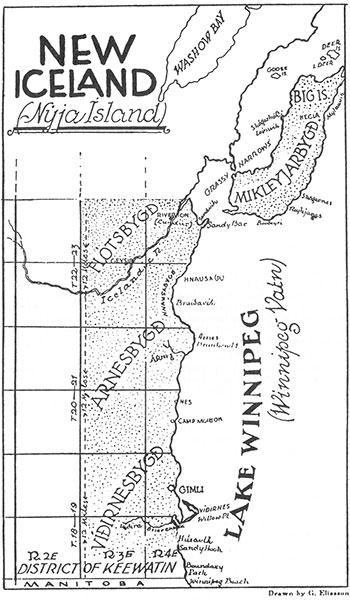
The new settlement stretched roughly 68 kilometres along the lake and included what is now Hecla Island. For more than a decade, New Iceland operated with remarkable independence. Settlers created their own local government, schools, and laws, preserving their language and traditions while adapting to life on the Canadian prairies.
The early years were challenging. The winter of 1875–76 was one of the coldest on record, fishing methods had to be adapted to Lake Winnipeg, and disease and natural disasters affected the small colony. Despite these hardships, the community endured and grew, becoming the centre of Icelandic life in Canada.
By the 1880s, settlements spread throughout the region and beyond, while Gimli became the cultural heart of New Iceland. When Manitoba’s boundaries expanded north in 1881, the colony officially became part of the province.
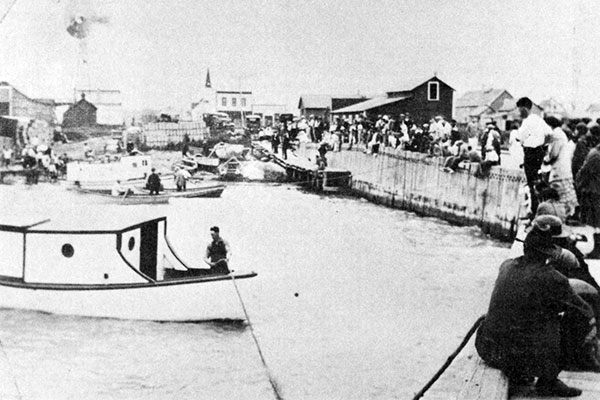
Gimli harbour (1921)
Source: Archives of Manitoba
Gimli
Founded in 1875 by Icelandic settlers seeking a new beginning, Gimli quickly became the heart of the New Iceland settlement along the western shore of Lake Winnipeg.
The town’s name comes from Norse mythology, meaning “home of the gods,” and today its Icelandic roots remain visible in local culture, landmarks, and traditions. From the famous Viking statue and harbourfront to the annual Icelandic Festival of Manitoba, Gimli proudly celebrates a heritage that continues to shape the community more than a century later.
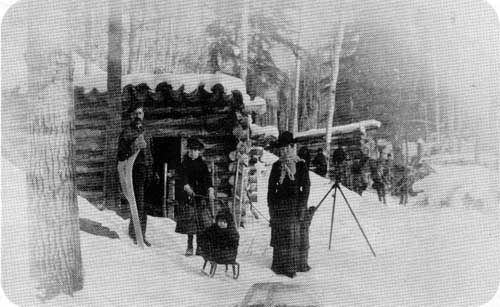
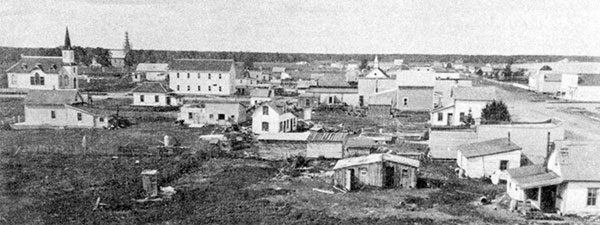
Gimli, Manitoba (1906)
Source: Archives of Manitoba
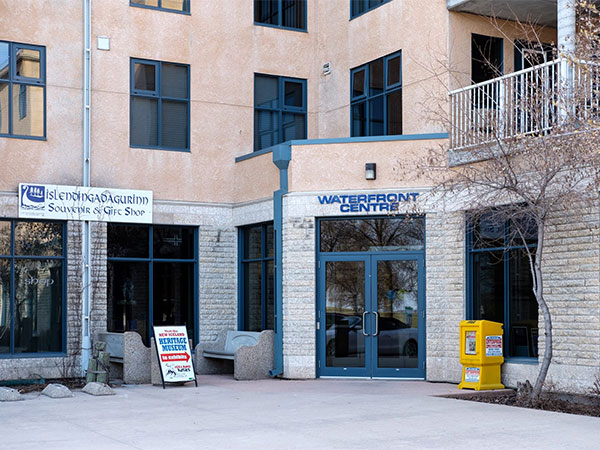
New Icelandic Museum of Gimli
The New Icelandic Heritage Museum is filled with exhilarating and unique exhibits. The New Iceland Heritage Museum (NIHM) aims to be a valuable community asset by offering engaging permanent displays, rotating exhibits, workshops, lectures, and programs.
This diverse approach caters to evolving audiences and addresses pertinent subjects in our ever-changing global landscape.
The New Iceland Heritage Museum showcases how the Icelandic people immigrated to Canada and the journey and hardships they went through to get here.

The Viking Park
In 2014, Islendingadagurinn marked 125 years of honouring Icelandic heritage, culture, and the impact of Icelanders on Manitoba. To celebrate this significant milestone, the Icelandic Festival of Manitoba’s 125 Legacy Cabinet Committee collaborated with partners, including the R.M. of Gimli and Betel Home Foundations. This collaboration led to the establishment of Viking Park (finalized in 2017) and the Viking Park Connectivity Project.
Viking Park is a must-visit when you are in Gimli, and don’t forget to take a photo with the Viking itself!

Tergerson & Sons General Store
A store is just a store unless it is Tergesen’s general store in Gimli! As the oldest operating general store in Manitoba and an excellent example of a rural community store, Tergesen’s is an institution, a must-see for visitors to the Interlake. Built in 1898 on the corner of First Ave & Centre St, now owned and operated by the fourth generation of the Tergesen family. A shopping Mecca for visitors looking for a unique piece of Gimli, with a wide range of books (especially on Icelandic Culture and the Interlake and Manitoba areas).

Gimli Habour Heritage Tour
Gimli stands at the core of New Iceland, serving as its emotional and economic centre. Throughout history, the Gimli harbour has been the essential source of livelihood for the community, with fishermen setting sail from its protective piers since 1900. Today, sailors, the Coast Guard, and lake researchers find refuge within its sturdy walls, shielding themselves from the turbulent forces of nearby Lake Winnipeg. The harbour’s evolving economic role is evident in its current state.

Icelandic Settlement Plaque
In October 1875, the initial enduring Icelandic community in Canada was founded within this region. Originally intending to settle near the Whitemud (Icelandic) River, a group of around 250 individuals altered their plans due to winter’s approach and instead landed to the south at Willow Point. Close to this area, the first structures were constructed, and a townsite was designated, named Gimli, inspired by the dwelling place of the gods in Norse mythology. In the subsequent year, over 1200 settlers established themselves along the western shoreline of Lake Winnipeg. This marked the establishment of the most extensive Icelandic settlement beyond Iceland’s borders.
Located in Gimli Town Park (4th Street and 4th Avenue, Gimli) is a plaque commemorating the Icelandic Settlement and it is a must-see when visiting Gimli.

Sugar Me Cookie Boutique
Traditional Icelandic desserts are available at Sugar Me Cookie Boutique. Sugar Me Cookie Boutique showcases and produces amazing Vinarterta that will leave your mouth watering.
The “…traditional, multilayer Icelandic cake is made by alternating thin layers of buttery shortbread with a cardamom and dried prune filling” (https://www.atlasobscura.com/foods/vinarterta).
This delicious treat will take you right back to Iceland. Those who immigrated to Canada from Iceland believe that Vinarterta is not only a treat but also an important symbol of Icelandic culture and heritage.

Riverton
Lundi the Moose
Developed in 2007, the Riverton moose sculpture proudly stands alongside the Riverton Transportation and Heritage Museum. The name “Lundi” derives from the village’s initial designation, rooted in the Icelandic term “lundur,” signifying a small wooded area. A number of Icelandic settlers managed to endure the challenging early Canadian winters by relying on the sustenance this animal provided.

Blue and White Signs
Tourists exploring the Rural Municipality of Bifrost-Riverton can locate the locations and names of various Icelandic homesteads, courtesy of a project undertaken by the Icelandic National League in the 1980s. The landscape is adorned with blue-and-white signs that mark the former locations of these homesteads along with their designated names.

Icelandic Settlement Plaque
In 1875, the initial wave of Icelandic immigrants heading to the western part of Canada, destined for the Whitemud River area, were compelled by situations to disembark at Willow Point, a more southern location. It was there that they established Gimli. In the subsequent year, over 1200 settlers spread out along the western coast of Lake Winnipeg, extending to Hecla Island. They changed the name of the White Mud to the Icelandic River. Apart from Gimli, two towns were planned: Sandy Bar at the mouth of the Icelandic River, and Lundi, which was eventually renamed Riverton.
Located in Riverton Town Park is a Plaque representing the monumental Icelandic Settlement in Riverton.

Source: Gordon Goldsborough
Centennial Park
Situated on Main Street in Riverton, Centennial Park occupies the grounds where the Möðruvellir homestead once stood. Within its grounds, you’ll find an open-air stage, a picnic shelter, and numerous monuments honouring the area’s rich history. Between 1875 and 1900, around 50 families emigrated from Iceland to establish their homes in the Riverton District, nestled along the shores of the Icelandic River.

Source: Doug Anderson
Riverton Walking Bridge
Throughout Riverton’s history, a pedestrian bridge has consistently linked both sides of the community, spanning the Icelandic River. In this location, five bridges have been constructed over time, each subsequent one a response to the ravages of flooding in Manitoba. The inaugural bridge was built in 1892, followed by reconstructions in 1910, 1932, and 1974.

Jóhann Magnús Bjarnason Monument – Municipal Heritage Site
The monument dedicated to Jóhann Magnús Bjarnason stands on the northern side of PTH 68, positioned between roads 14E and 15E. This location was once home to the Bjarnason family’s homestead, known as Arnheidarstadir, which translates to “Eagle Heath Stead” in English. The Icelandic National League initiated the creation of this commemorative site, which features a triangular limestone structure and a serene park by the creek. Local resident Nelson Gerrard designed the monument in 1989.

Source: Gordon Goldsborough
Betsy Ramsey
Situated within a farmer’s field at SE 11-23-4E, you’ll find the resting place of Betsey Ramsay. John Ramsay, a notable figure in a Saulteaux Indigenous group in the vicinity of Lake Winnipeg, played a significant role. He and his family imparted crucial wintertime survival skills, along with hunting and fishing methods, to the initial wave of Icelandic settlers.

Source: Gordon Goldsborough
Sigtryggur Jónasson Monument
Positioned at the center of Riverton, within a quaint park adjacent to the western terminus of the pedestrian bridge, stands the Sigtryggur Jónasson Monument. Erected in 2012, this tribute commemorates the ‘Father of New Iceland’ and recognizes his significance in both local and national historical contexts. The life-sized bronze portrayal of Sigtryggur during his youth gazes across the Icelandic River toward the territory he pioneered, clutching a telescope and a compass.

Source: George Penner
Engimýri Homestead
Situated at the northern terminus of Queen St. in Riverton, you’ll encounter a notable example of the wooden structures that individuals of means built in New Iceland during the early 1900s. The Engimýri homestead, established by Tómas Ágúst Jónasson and Guðrún Egidía Jóhannesdóttir in 1877, features a frame house constructed between 1900 and 1901. This dwelling stands as one of the most ancient residences within the region, recognized as New Iceland.

Source: Rose Kuzina
Hecla
Hecla Historic Village
In 1876, Icelandic immigrants settled in Hecla, which was part of “New Iceland”. “New Iceland” also included Gimli, Lundi (modern-day Riverton) & Arborg.
Nestled in Hecla, the Hecla Historic Village is essential for understanding the Icelandic people. The Hecla Historic Village includes the Community Hall, a log house, old Hecla Schoolhouse, Tomosson’s Boarding House, Hecla Church, a dock, an ice house, fishing boats, a tool shed, and Hecla General Store & Solmundson Gesta Hus (Guest house). Take a self-guided walking tour or a guided tour from Hecla/Grindstone Provincial Park.

Hecla Church at the Hecla Historic Village has services every Sunday in summer at 11:00!
Arborg
Arborg & District Multicultural Heritage Village & Campground
In 1875, the first Icelandic settlers established a colony on the western banks of Lake Winnipeg, which the Canadian government named New Iceland. Notably, as early as 1878, the Arborg region, located just to the west of New Iceland, captured the attention of forward-thinking pioneers.

Arborg Bakery
If you didn’t get enough Vinarterta on the first stop, Arborg Bakery has you covered. Arborg Bakery is a charming culinary haven nestled in the heart of the town. With its delectable array of freshly baked goods, from artisanal bread to mouthwatering pastries, the bakery delights locals and visitors alike with aromas that evoke warmth and nostalgia.

Lundar
Founded in 1887 by Icelandic immigrants, Lundar was named in honour of the Icelandic town of Lund. Lundar, which achieved village status in 1947, traces its origins to Sigtryggur Jonasson, the pioneering settler who arrived in the area in 1886.
Lundar Pioneer Museum
Within the Lundar Museum, you’ll find a collection of historical structures, including the former CNR station, Mary Hill School, former Notre Dame Church, two log houses, a CN tool shed, a caboose, and a steel building. The exhibits showcase pioneer and household items, along with an Icelandic library. The museum is accessible from mid-June to September.

Lundar Pioneer Monument
In Lundar, located within the Rural Municipality of Coldwell, a monument was constructed in 1955 to honour the Icelandic settlers of Lundar, Westfold, Otto, and Markland. These pioneers arrived in the area in 1887.