Manitoba’s marine history is parked on a lawn in Selkirk and you can climb aboard
We drive over the Red River without thinking about it. Bridge, coffee, podcast, gone. But for most of the time people have lived here, it was often the route travelled.
Long before Manitoba was Manitoba, the Red, the Assiniboine, Lake Winnipeg and the Nelson formed a water highway running all the way to Hudson Bay. Anishinaabe (Ojibwe/Saulteaux), Cree (Ininiwak), Dakota, Assiniboine (Nakota) and Red River Métis peoples travelled and traded along these waters for generations, carrying goods, news and families between communities.
The fur trade used these routes because they already worked. York boats hauled freight north to Norway House, one of the most important crossroads in the northwest. Settlers arrived by water too, well before rail did. The river was the road, the mail route and the supply line, all at once.
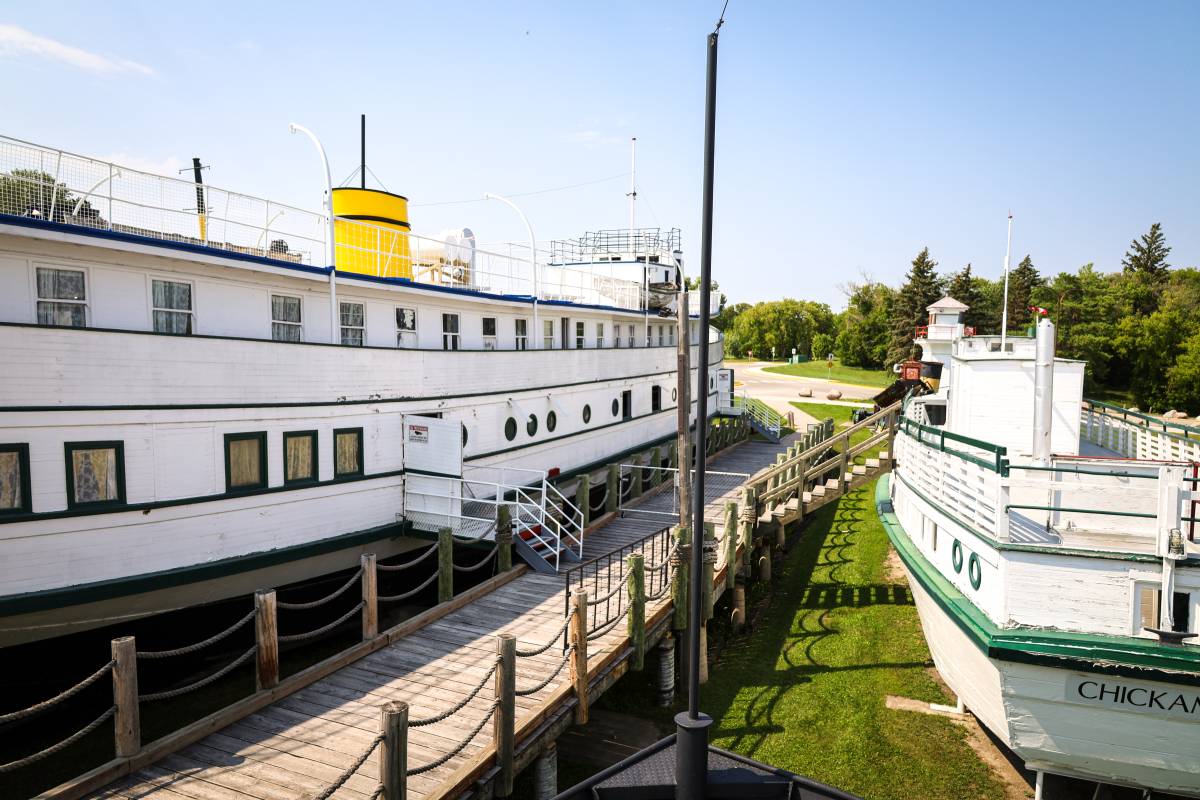
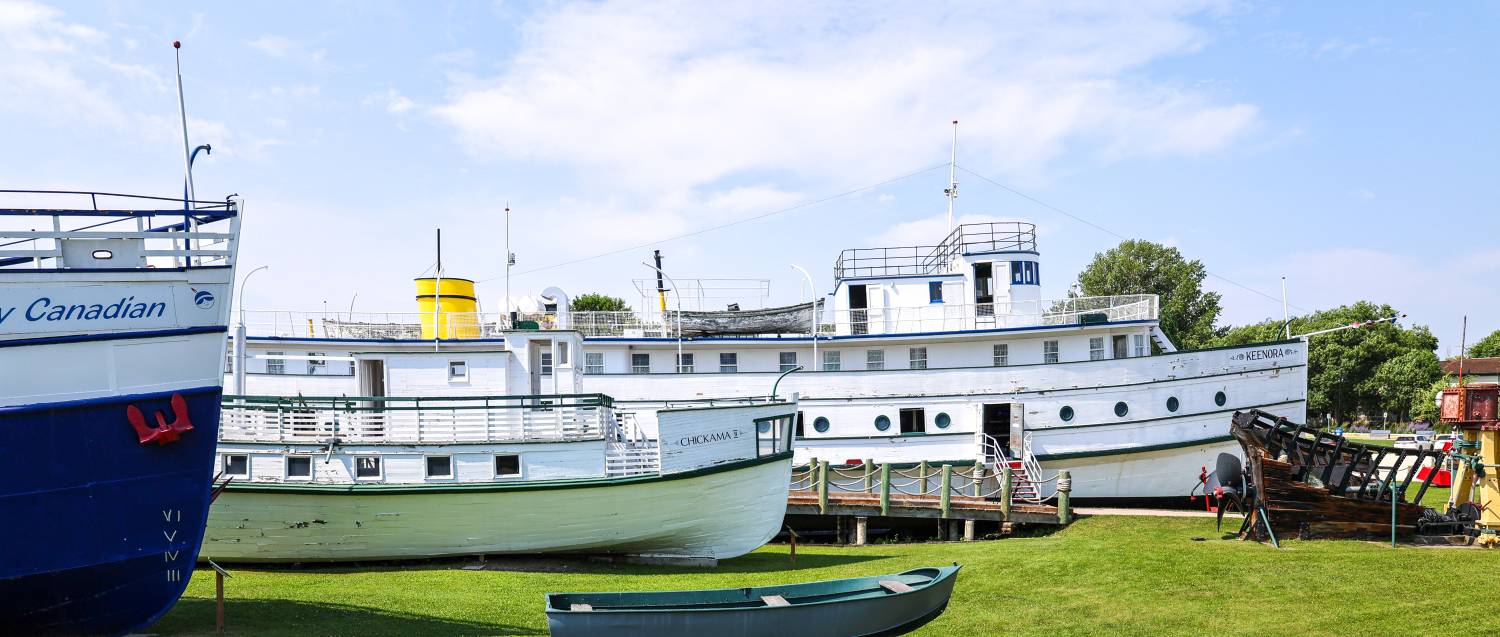
And that story ran right up to living memory. It’s tied up at the Marine Museum of Manitoba in Selkirk, where six historic ships sit on dry land, letting you walk straight into them and into a different mode of transportation.
The fleet
The centrepiece is the S.S. Keenora, built in 1897 and the oldest steamship in Manitoba.
She’s 158 feet long, once held 65 passenger cabins, and spent a season in 1917 working as a floating dance hall for a syndicate of Winnipeg lawyers. Mostly, though, she was a lifeline.
Her weekly runs brought passengers, mail and supplies to isolated communities up Lake Winnipeg, including delicacies like fresh fruit that nobody had seen since the start of winter. For a stretch, she carried up to 1,400 tourists a year (wow!), most of them American.
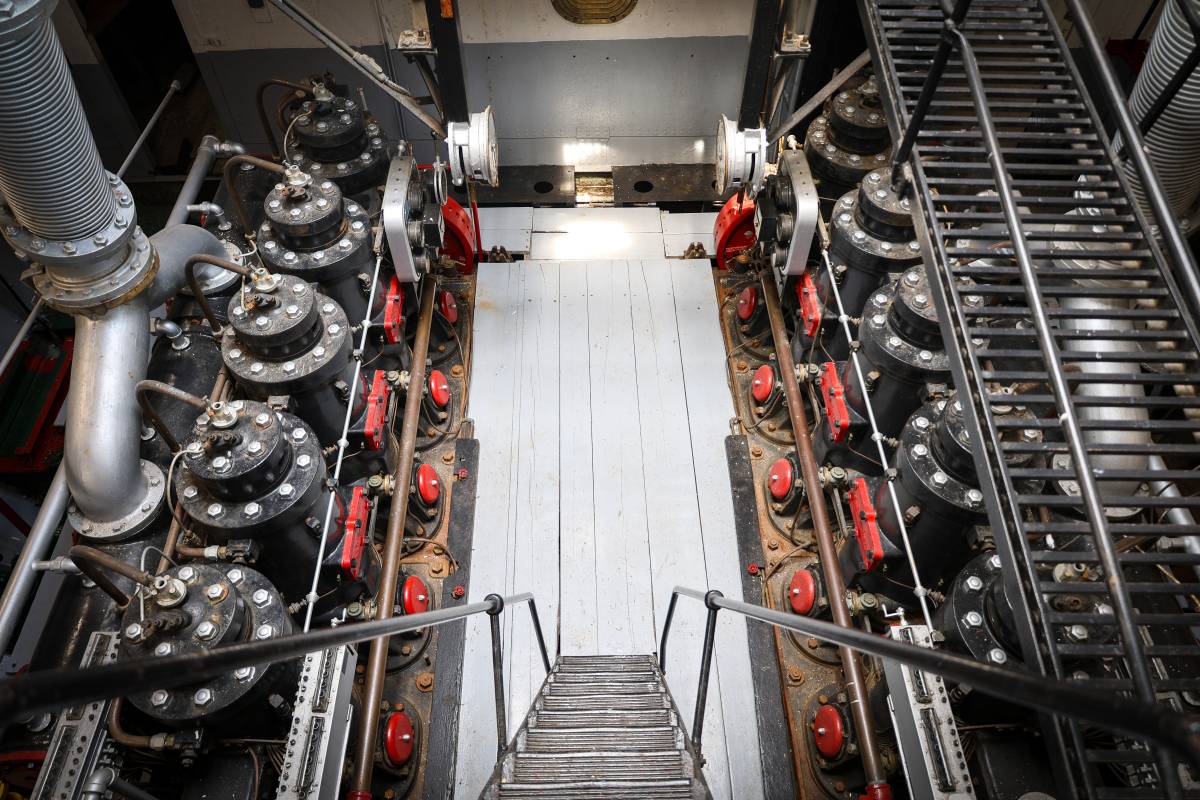
The C.G.S. Bradbury, prefabricated in Quebec and assembled on the bank of the Selkirk slough in 1915, worked as a fishing patrol vessel, lighthouse tender and icebreaker. In 1917 she pushed through half a foot of ice to bring doctors and medicine to a northern settlement hit by a flu epidemic. She sat idle in the slough from 1935 until 1952, then got a second life with a pair of five-cylinder Kahlenberg diesels before retiring in 1973.
The Chickama II, built in 1942 by Purvis Boatworks right in Selkirk, ran freight from Warren’s Landing to Norway House until 1965; the same route was later taken over by the Joe Simpson, a flat-bottomed 1963 freighter named for Selkirk-born hockey star Bullet Joe Simpson.
The Peguis II was a 1955 government tug that spent two decades hauling barges of sand and silt out of Lake Winnipeg’s harbours and channels. And tucked among them is the little Jackie S, built in Selkirk in 1952 by Gus Stephanson and named for his daughter, the last all-wood whitefish boat ever used on Lake Winnipeg, from an era when crews worked gruelling twelve-hour days and unloaded their catch by hand.
Read the panels in order, and you watch an entire industry evolve in front of you: rowboats to sailboats to gas engines to diesel, whitefish to pickerel, steam to combustion, water to road.
Bringing the kids (or grandkids)
This is a genuinely great family stop, with one honest caveat: strollers are effectively impossible here. You’re climbing ladders, ducking through, and stepping over raised thresholds. Babies need to be carried, and toddlers need a hand and a close eye. They’re real ships, so they’re not very accessible.
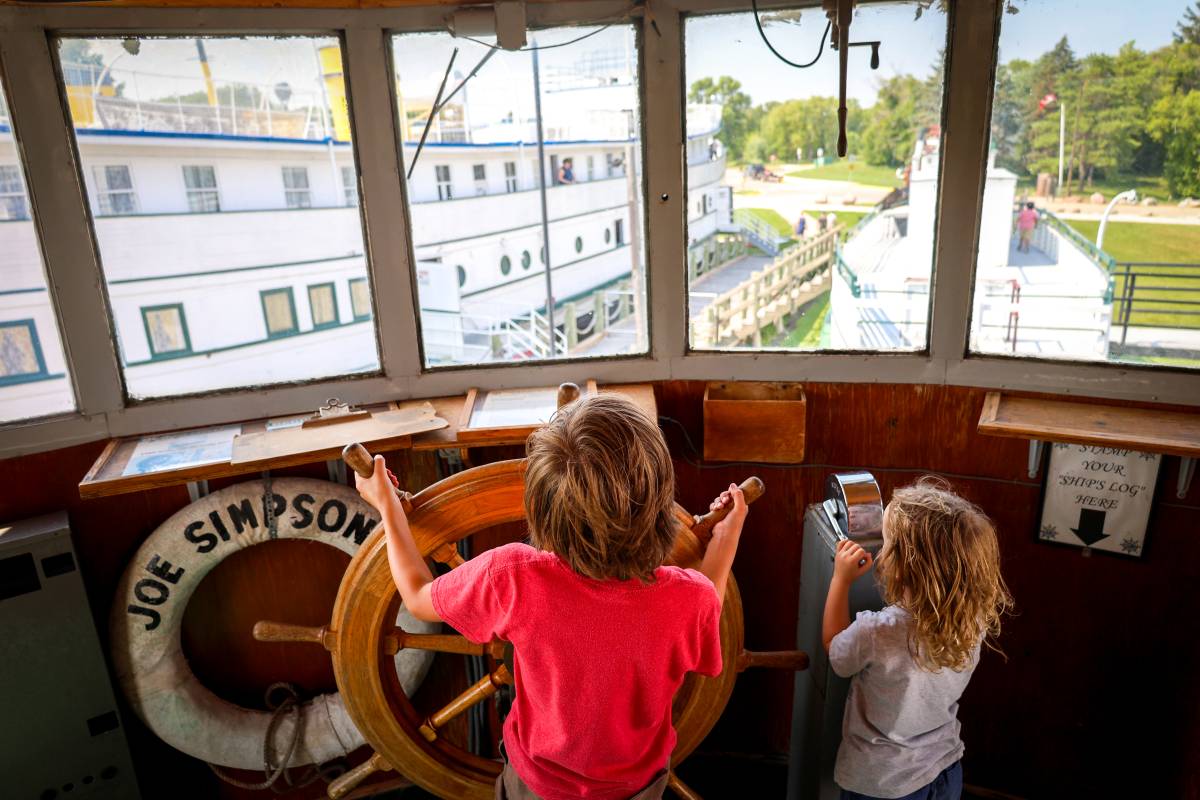
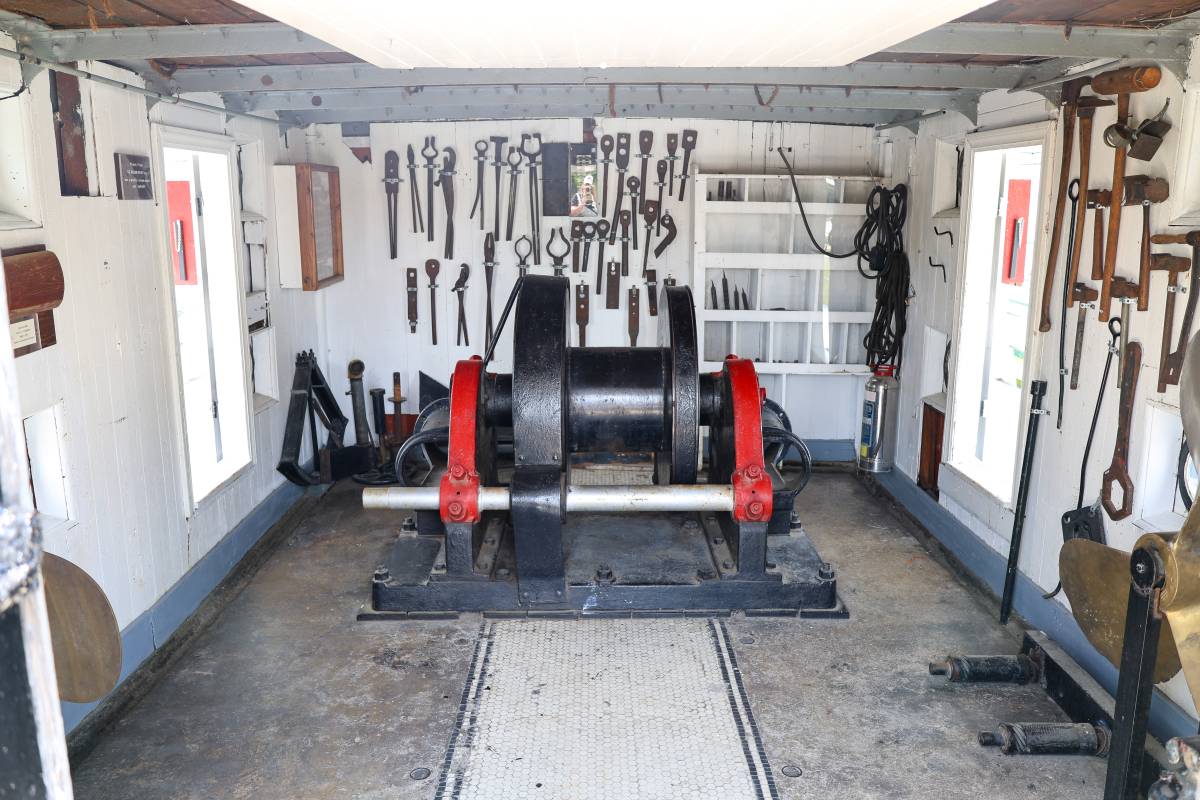
But if you’ve got kids roughly four to fourteen, this place is close to perfect. They can stand at every ship’s wheel, peer into engine rooms, and pretend to serve coffee to their friends (either fancy-style on the Keenora or roughin’ it on the Bradbury). During your stay, you’ll find many families running from ship to ship, with plenty for kids to touch, pull, and climb. Not everything is behind glass or off-limits.
It’s tactile history and gets little imaginations going.
Go see it
The Marine Museum of Manitoba has been at this since 1972, a non-profit running on community support and visitors like you. It’s about 35 km from downtown Winnipeg, close enough for a half-day trip, interesting enough to fill a full one. One admission gets you aboard the whole fleet, and there’s a gift shop on the Keenora.
Season, hours and current admission rates are posted at marinemuseum.ca, along with group tours and amazingly popular seasonal events like the Haunted Harbour ghost tours.
Go this summer. Climb the ladders. Let the kids ring the bells and pull on the wheels. Then drive home over the river and see if it looks the same.