There are events you go to, and then there are events you step into.
The Manitoba Highland Gathering is firmly the second kind. The moment you walk onto the grounds at Legacy Park in East Selkirk, you’re greeted by the sound of pipe bands, athletes warming up, kids charging toward activity areas, and the unmistakable smell of something deeply, wonderfully Scottish coming from the food booth. It’s a lot to take in, and that’s before you’ve even looked at the schedule.
This is your guide to making the most of it on June 20 – 21st 2026.
Aye, It’s Good
Your First-Timer’s Guide to the Manitoba Highland Gathering
A Little History
The Manitoba Highland Gathering began in 1967 in Selkirk, Manitoba, when a man named Bob Burns, a Scottish immigrant who had moved to the area in 1960 to work at the Selkirk Mental Health Centre, proposed bringing Highland culture to the community. He organized the first gathering himself, inviting pipe bands from the UK to come and perform. Many of his fellow staff members, who had also emigrated from Scotland and the British Isles, brought their culture with them and helped build something that would last.
For decades, the Gathering was held in Selkirk Park before finding a permanent home in 2014 at Legacy Park in East Selkirk, in the RM of St. Clements. In the years since, it has grown into one of Western Canada’s finest gatherings, recognized on Travel Manitoba’s list of top ten rural festivals, awarded a spot in the Top 100 Events in North America by the American Bus Association, and featured in CAA Manitoba’s magazine. Not bad for an event run entirely by volunteers.
The Manitoba Highland Gathering is a non-profit organization run exclusively by volunteers, from youth to seniors, striving to promote, preserve, enhance, share, involve, and educate about Scottish culture and heritage, arts, sports and agriculture. In 2026, it celebrates its 58th year. That kind of staying power doesn’t happen by accident. It happens because the people behind it genuinely love what they’re doing, and it shows.
What to Do: The Top Experiences
The Heavy Games (Bring a Chair)
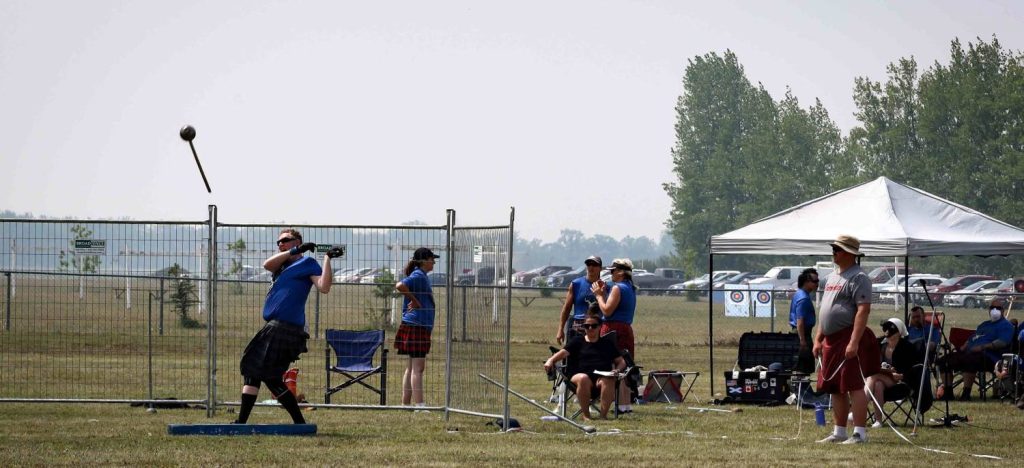
This is the centrepiece of the Gathering, and unlike anything most people have ever watched in person. The Highland Heavy Games are a series of athletic competitions rooted in Scottish tradition, events that were once used to test the strength and skill of Highland warriors and clansmen. At Legacy Park, you’ll see the caber toss (throwing a full-length wooden pole end over end), the hammer throw, the stone put, the sheaf toss, the weight for distance, and the weight throw for height. These athletes are extraordinary, and the events are equal parts impressive and entertaining.
Find a good spot on the grass and plant your chair early. The Heavy Games take time, things happen fast, and you’ll want a clear sightline (thankfully, it’s on a little hill).
The Pipe Bands and Highland Dancing
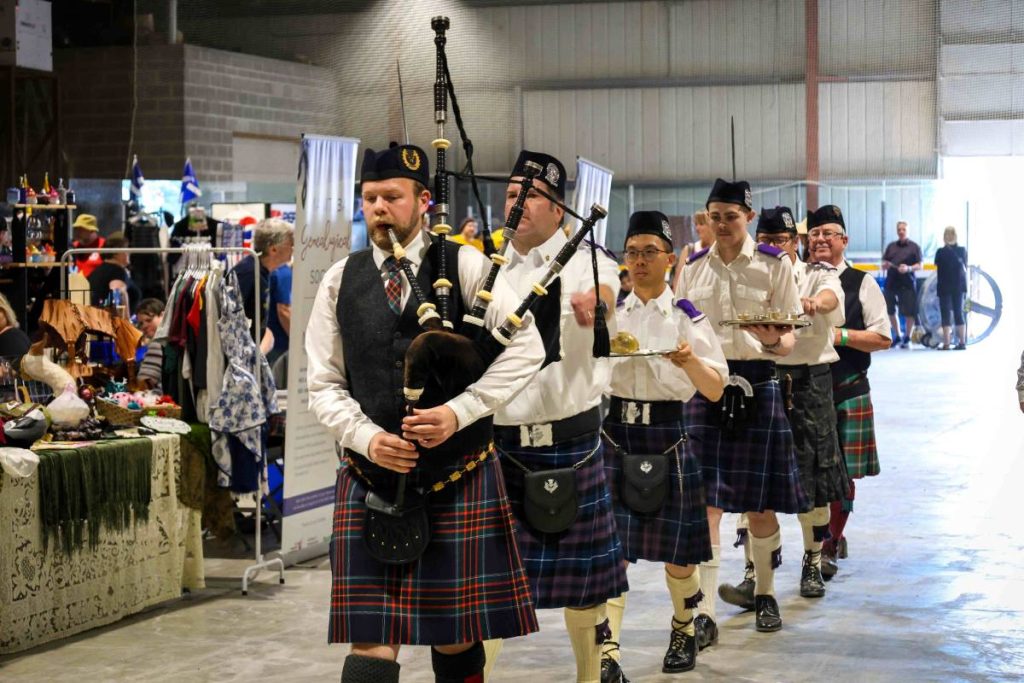
You’ll hear the pipe bands before you see them, and once you do, you won’t stop watching. Multiple bands march throughout the grounds across both days, with solo piping and drumming competitions running alongside them. The sound of a full pipe band in an open field is one of those things that gets under your skin even if you didn’t expect it to.
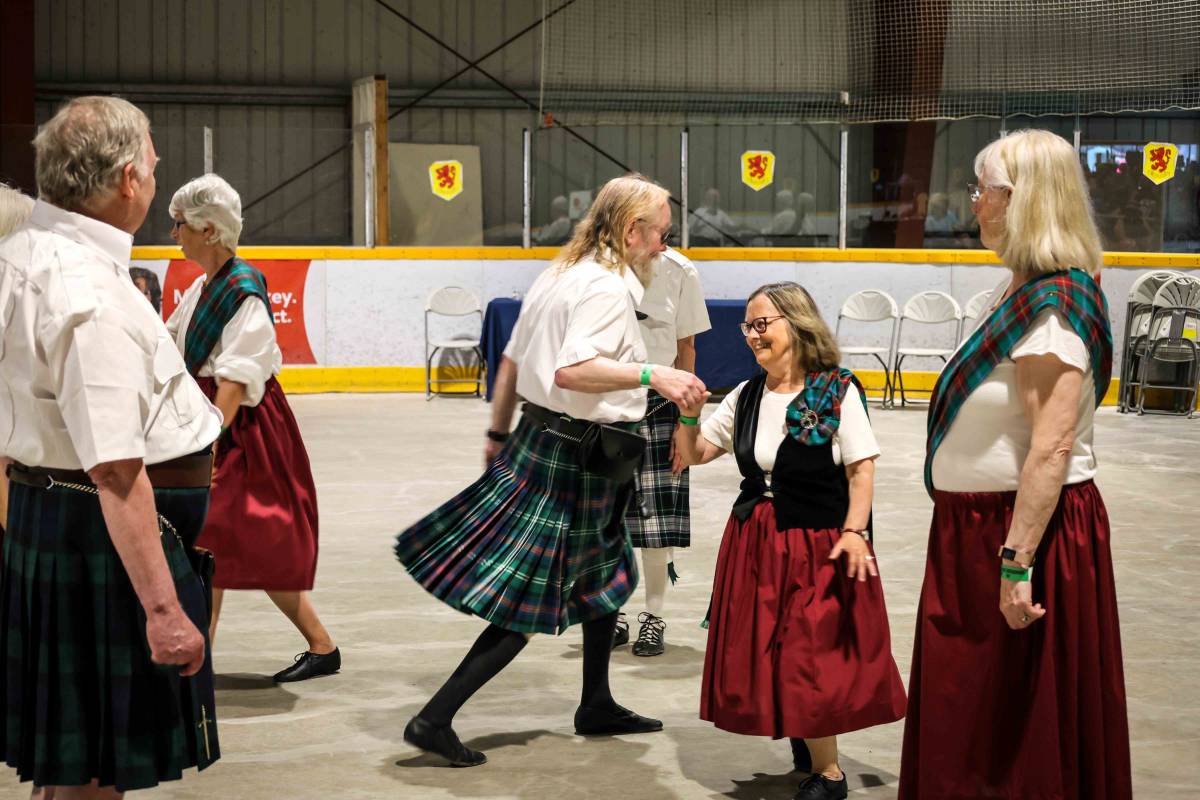
The Highland Dance Competition is equally compelling. Competitors in full traditional dress perform the Highland Fling, the Sword Dance, and other classic routines with a technical precision and athleticism that most people underestimate until they’re watching it up close.
The Living History Villages
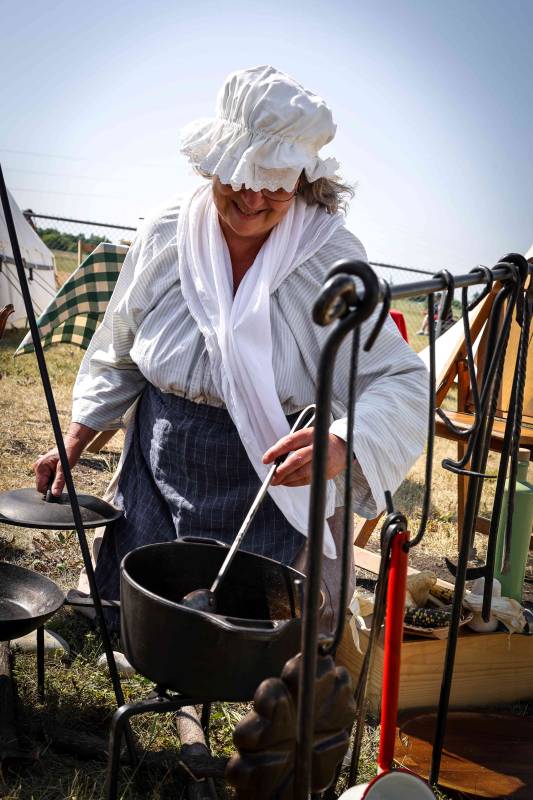
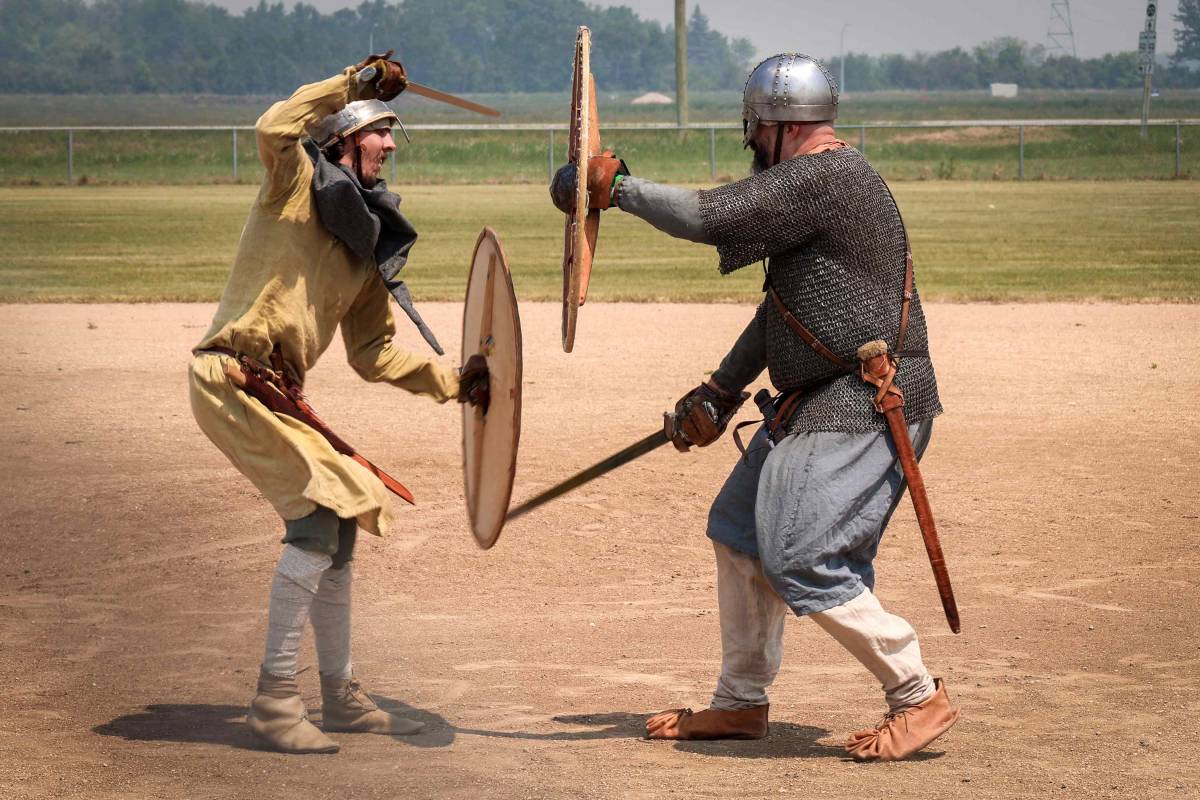
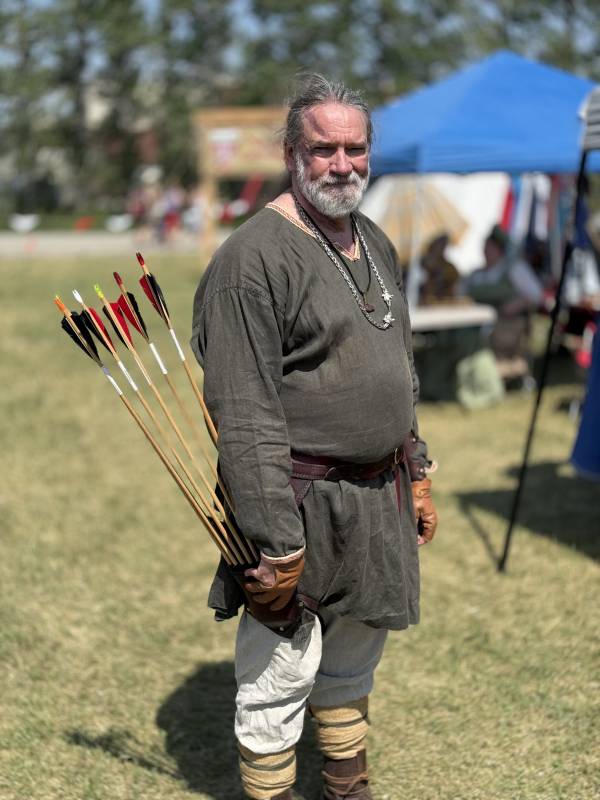
This is the hidden gem of the Gathering and what makes it genuinely unique. Four distinct living history groups set up immersive villages on the grounds, each representing a different era. The Hands of Lugh take you to 600–950 AD Viking life. The Barony of Castel Rouge covers the Medieval period. The Jacobite Period group represents 1745–47; the Outlander era, if that means anything to you. And the Manitoba Living History Society covers 1812–1850.
When you walk into one of these villages, you’re walking into that time period. The interpreters are in full authentic costume, in character, ready to talk about daily life, warfare, tools, food, and culture. Join in, they’ll have lots of interactive booths for you to try.
The Haggis Ceremony
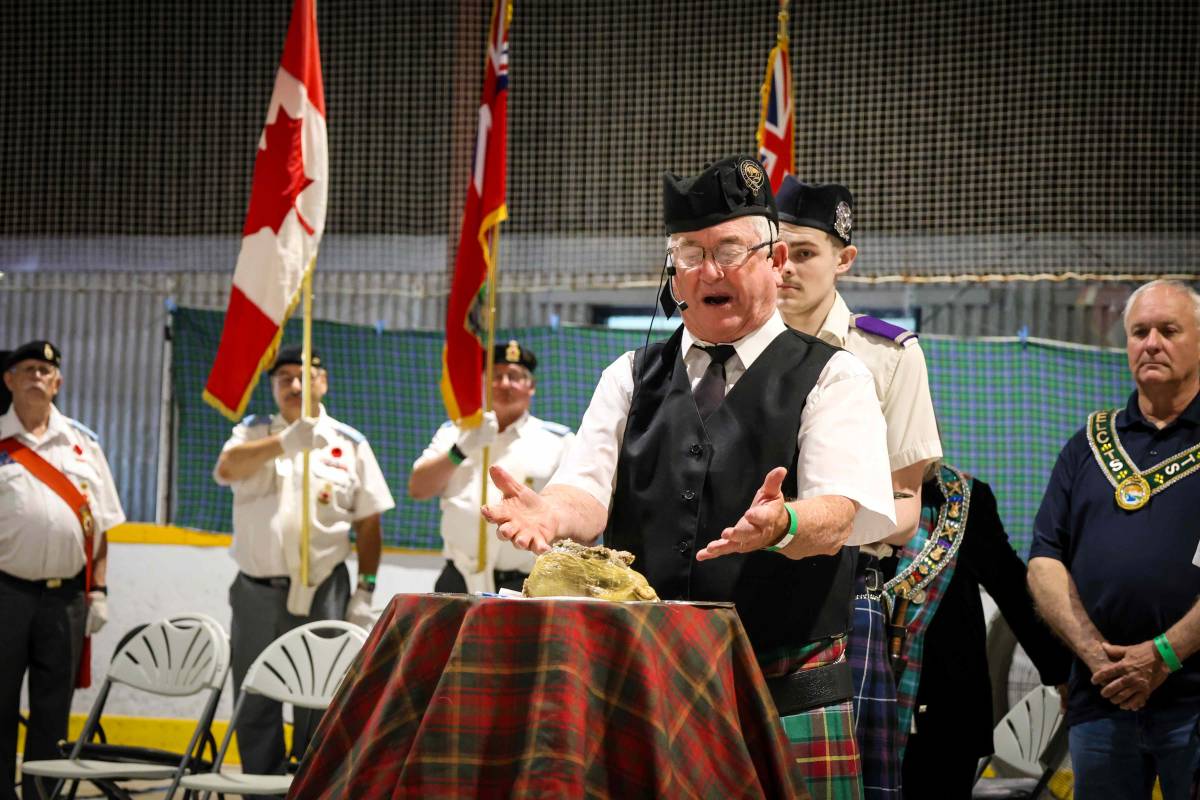
One of the most memorable moments at the Gathering is the ceremony built around the haggis: a dramatic, pipe-accompanied procession and recitation of Robert Burns’ famous poem “Address to a Haggis.”
If you’ve never witnessed it before, it is equal parts solemn, theatrical, and genuinely moving. The haggis is piped in, the poem is recited with conviction, the ceremonial knife comes out, and suddenly you understand why Scots take this dish so seriously. Check the schedule so you don’t miss it; it happens at a specific time, and it’s not long, but it’s one of those moments people remember. If you get close enough, you can even smell it!
The Scottish Market and Clan Booths
A large portion of the market and some of the ceremonies and living history enactments take place inside the arena, making this a great spot to retreat to if the weather turns or you need a break from the sun.
Browse tartan goods, Scottish merchandise, and handcrafted items from local and visiting vendors. The clan booths are also worth stopping at; if you have any Scottish heritage, the Manitoba Genealogical Society and the clan representatives can help you explore it. Even if you don’t, it’s fascinating.
The Food
Let’s be honest; this is a highlight. The Red Lion Scottish Food Booth is the place to go for the authentic stuff: scotch pies, haggis, scones and jam, oat cakes, scotch eggs, bannock, and imperial cookies. This is cuisine built for people who work hard in cold climates and need to be properly fed.
If you’re feeling adventurous, try the haggis.
It tastes significantly better than it sounds. If you’re not quite there yet, or you’re feeding kids who have strong opinions, there are burgers and fries available, too. Nobody goes hungry.
The Wee Folk Games
If you’re bringing kids, the Wee Folk activities are made for them with a dedicated area where children can try their hand at their own version of the Highland Games. It keeps the little ones engaged and gives them their own story to tell on the drive home. While the kids are busy, you have more time for the scotch pie. Everyone wins.
Top 3 Tips for First-Timers
1. Read the schedule before you go and keep it with you. The grounds at Legacy Park are bigger than they look, and things happen in pockets. A fencing demonstration, a living history battle, the haggis ceremony, these are timed events that happen in specific locations, and it’s easy to be watching the pipe bands on one side of the grounds while something spectacular is happening in another corner entirely. Check the schedule at manitobahighlandgathering.org before you arrive, take a screenshot on your phone, and check it throughout the day. You will thank yourself.
2. Bring a chair, wear layers, and come rain or shine. Most of the Gathering is outdoors: the Heavy Games, the pipe bands, the living history villages, the dancing, the Highland cattle.
The arena is available for the Scottish Market, some ceremonies, and as a rain refuge if the weather turns (and this is Manitoba in June, so plan accordingly).
Comfortable shoes are essential. A chair for the Heavy Games is mandatory (or at least your body will thank you later). And a light layer for the afternoon shade will serve you well.
3. Come both days if you can and wear a bit of tartan. Saturday and Sunday each have their own energy. If you can only make one day, Saturday tends to be the bigger day, but Sunday has its own rhythm and is often a little less crowded. Either way, lean into the spirit of it. You don’t need a full kilt, a tartan scarf, a plaid shirt, or any nod to the theme to make you feel more connected to what’s happening around you.
Keep your ears open for when they ask all clans to announce themselves. It’s a pretty amazing moment.
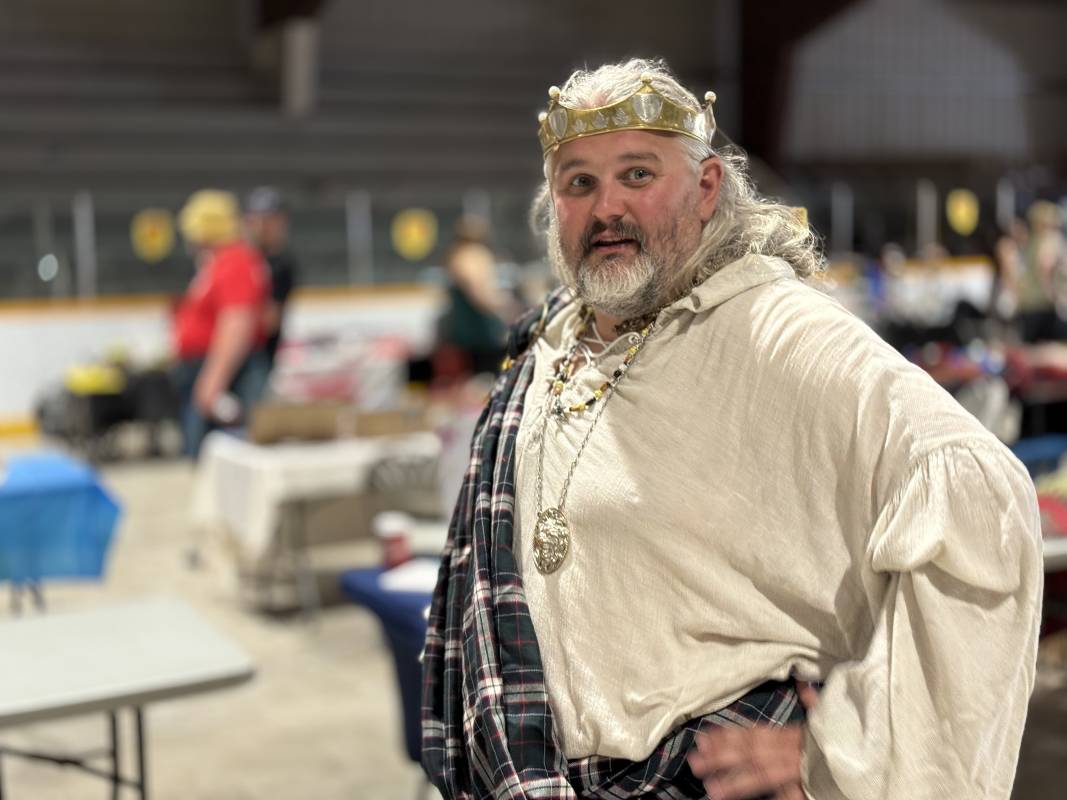
The people who commit to the costume consistently have the best time. The Gathering encourages it, the community embraces it, and nobody will judge you for going all in.
For tickets, the full schedule, and directions to Legacy Park in East Selkirk, visit manitobahighlandgathering.org.
Come hungry, come curious, and come ready to be surprised by how much you enjoy watching a man throw a telephone pole.